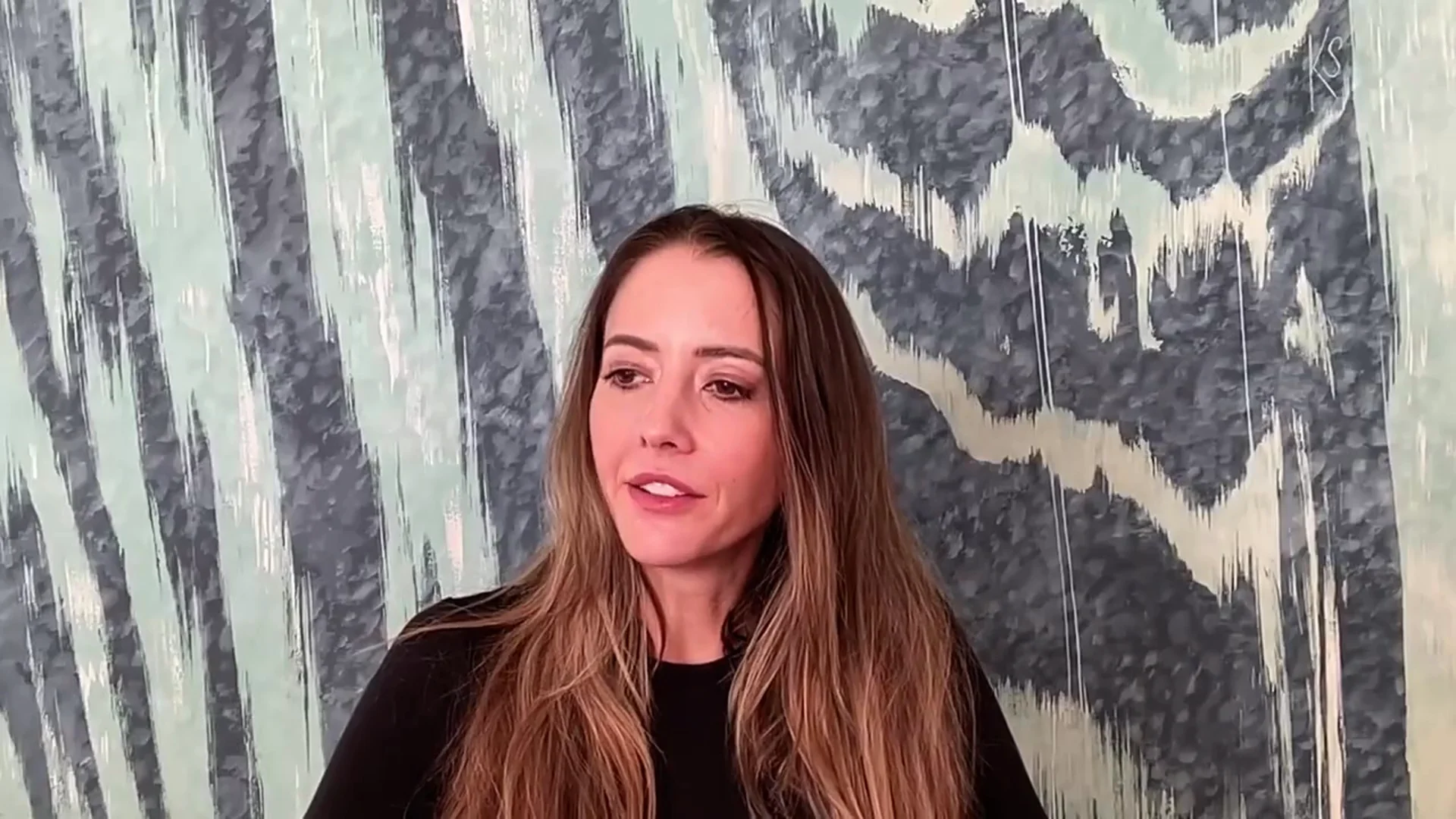
No. 27 of 44 · 10 September 2025 · 1 h 13 min Taryn Southern Surfing the Exponential Tech Tsunami Watch the conversation On YouTube Everything said in it, in the order it was said: 103 turns, 49 of them Taryn Southern's. Press one to hear it from its second. 0:00 Taryn Southern With all of these spaces, I am initially attracted by the promise of what could be and the insane benefits that these technologies bring to people. And that's always where the focus is. But of course, when you're early in anything, you can't see the third order, fourth order magnitude consequences of the tech. So I guess all that to say, yes, like I buy my own bullshit. Like I'd buy my own narrative design packages if I was a startup company because you need it and it's smart. And I would never work with a company that I thought was inherently evil or bad. But at the end of the day, we have no idea what we're building and what we're destroying. So maybe at some point I will just completely hit the eject button and become a farmer and have a bunch of cats in the house. And you know, just say I'm not going to contribute to this nonsense anymore.1:18 Michael Garfield Long enough to get excited and then bored and then frustrated and then scared and around again several times. I've learned to live amidst the constant disruption and to relate to it in the spirit of a martial art. Back in 2010, I remember sitting neck deep in the Pacific Ocean off Costa Rica and feeling like the water was teaching me a lesson about the different strategies I could take as each surge came to shore. I could stand there in denial and get pummeled, or I could turn sideways and reduce my profile, cutting through the water like a knife. Or I could dive under and try to let them pass over without getting rocked too much, or I could leap up and ride them in. At the time it was profoundly evident that this was an analogy for the crazy changes we already knew were coming. I was young and crazy myself, and suspected that on top of global warming and financial crisis and whatever else, a flare from the next solar maximum would trigger a geomagnetic event that would knock out global infrastructure and induce a planet-wide near-death experience.2:21 Michael Garfield Best to be prepared, not by hoarding food and ammunition, but by learning how to move with sudden and repeated shocks. In retrospect, I got the transformation timescale wrong, but not the vibe. Instead of major changes over three days, it's taking our entire lifetimes. A lot of us have gotten used to it, kind of dissociated, curled up in our shells like clams, ignoring news. And honestly, that's fine if you're thick skinned enough and firmly anchored. Most of us cannot just burrow down and wait it out forever or root in and sway like a strand of kelp. For some of us, just standing there means being dashed against the rocks. The price of being sensitive means you must be responsive also. And so the birds and fish can either rise above or swim below, respectively. And some of us are surfers, used to eating shit from time to time, reverent of great powers we cannot control, in love with the cyclicity and natural strength of the sea, and on our boards as much as possible. Surfing takes a lot of energy and discipline and sense to know when you should stay on solid ground.3:29 Michael Garfield But as the waters rise around us and more of the world seems like an inner tidal zone, there is less solid ground to stand on. Surfing seems less optional. We have to learn to take a fluid stance, to move with greater forces, to recognize the signs of an approaching big one, to swim out at the right time if we're going to try and ride it, to model safe technique for anyone who might be watching from the shore. Fifty years ago, stability looked different. The waves had not erased so much, and one could count on the persistent structures of our institutions more than we can now. In this century, stability is something else. It is more adaptive, algorithmic, and relational. Boom and bust cycles are fast, and there's always another one coming in. Learn to listen to the water. Today's guest Terren Southern is someone I consider a master surfer of technological change. A fellow elder millennial, artist, creative technologist, strategist, and dancer in the liminal zones of high chop, she's better than I am at finding the pocket, has made a name for herself for writing some serious bombs, and seems to know precisely when to bail.4:36 Michael Garfield Starting as an actor, internet famous for being an early YouTube influencer, and for her album I Am AI, the first LP composed and produced with an LLM, she caught air with nine best film nominations at the Tribeca Film Festival in 2019, with the premiere of her documentary I Am Human, co-directed with Elena Gabi, an intimate look at the lives of three people with implantable brain interfaces, and the medical, ethical, and societal implications. She's also produced an award-winning musical VR series for Google using Tilt Brush and Blocks, worked as chief storyteller for BlackRock Neurotech, minted the first song token on the Ethereum blockchain, spoken and consulted all over the world, operated as an angel investor, and survived breast cancer. In other words, she's just the person to teach you how to hang 10 instead of duck diving under the next pounder. Let's drop in and grab the rail. Thanks for listening. Terrence Southern, you're on the loop. Thank you. Thank you. This is my Maya culpa for recording an episode of Future Fossils with you that suffered horrible technical issues and was never released, even though it was really good.6:11 Michael Garfield So I'm glad you were willing.6:12 Taryn Southern We're all good. We get to finally do it now. Yes. We've evolved. We're different humans now.6:18 Michael Garfield We are. That was like during COVID. I think none of us knew what was going on. I think you were in chemo, and I had a baby and shit show. And now we've just learned to live in a that's the like chronic rolling shit show of the new normal.6:34 Taryn Southern That's right. We've accepted.6:36 Michael Garfield Anyway, where I would love to start with you is to hear about the gritty prequel from the early Terran Southern, like before you and my wife were going to high school together in Wichita, like early Terran Southern. Because what I want to do when we start getting into these big philosophical and speculative ideas is to anchor that in some sense of where you come from and why it is that you care about the things that you do, the incitatory, early emotional developmental stuff that leads to the psychoanalysis, if you will, of psychological. Yeah, you're on the kill.7:21 Taryn Southern An AI enthusiast. Great. So I, like your wife, hail from Wichita, Kansas. It is actually the center point of the United States. So I don't know what that says about me or my birth chart or my astrological sign, but there you are. I grew up really obsessed with technology. I remember the first time being on a computer. I was at my uncle's house. He had just purchased a, I think it was a, I actually don't know. I think it was a Dell. It was definitely in the Microsoft family. And I was playing with the first earliest version of MS Paint, and I just was transfixed. I was like, this is amazing. How do I get this? Mom, dad, please, can we get a computer? Took a few years, but I think I quickly realized that my thirst and my hunger for seeing the world and for getting outside of this little Kansas bubble was best served through the internet. And I was just learning anything and everything. I was in AOL chat rooms, learning how to code.8:27 Taryn Southern I remember being obsessed with Google the second that it came out and learning how to use music software, editing software, playing virtual games. So yeah, I my obsession with technology, I think, really was born from a little sense of feeling contained in the world, like in this place that wasn't necessarily the cultural epicenter of the United States.8:53 Michael Garfield So yeah, that's an interesting place to start because if we fast forward to the documentary that you produced, I am human, about brain computer interfaces and the medical argument for brain implants. This the people that are dealing with they're quadriplegic where they have Parkinson's, and you you're it really makes sense of the frame that you've been putting on technology, which is that it is compensatory for some sort of structural limitation, if that makes sense.9:32 Taryn Southern That like yeah, and not just compensatory, it's it's beyond that. I think it's actually expansive. It's there's so many opportunities that I've had in life as a result of being able to apply my curiosity and my seeker attitude to technology because there's just there's no limiting function. You can take it anywhere you want to take it. And the same is the case with those individuals in the movie. Yes, of course, it is restoring function and is giving back certain pieces of independence and quality of life that they wouldn't have otherwise had, but it's also enabling new sensory functions that regular able-bodied individuals do not have access to.10:21 Michael Garfield How to feel the world in dimensions and spectra that are not available to most people, and they stand at the edge of things and report back to us. And obviously, that's been a huge selling point for you in your career. That I think about your path and mine have taken very different courses, but the fact that you were out ahead with early musical tokenization on the blockchain, that you were out ahead with the the AI composition, hybrid composition for pop music. I think at one point I told you, and and this is a similarly buried in the footnotes of my own biography, but it's like one of those things that I reflect on. Through the Google Glass, through a Google video call, up a mobile hotspot into space, back down to Earth through a projector on stage.11:31 Taryn Southern When did you do that?11:32 Michael Garfield In 2013.11:34 Taryn Southern Wow, okay.11:35 Michael Garfield And I think there was like only one other person who actually did do that, and they were it was like the Rolling Stones or something. It was like some insane publicity stunt, but got there first. And the thing that really excited me about this kind of work, what excites me about creative technology and what I want to hear you riff on more is that sense of I don't know, like being like an astronaut or a psychonaut or being these being somebody who has who gets the privilege. And I again just to just to ground this, to establish that I think that this does have to do, like you said, not just compensatory, but that there is this relationship between visionary exploration and some kind of I don't know whether you want to call it a sense of lack, like the boredom of growing up in the Midwest or being the way that shamanic cultures used to take people that they recognized as having potential as seers, and then lock them in caves for a very long time until they became a different kind of person that was then useful to that society as somebody who saw differently.12:58 Michael Garfield And so when I've talked to all sorts of folks, this is a common theme that comes up again and again is that there's a relationship between being, I don't know if you want to call it deprived or. Feeling some sort of lack or of simply intentionally limiting the scope of one's experience so as to allow other dimensions of one's being to flower in the way that blind people have exquisitely excellent hearing, right? But yeah, I'd love to just hear you explore this tangle of stuff and fun your inner life as somebody who is compelled to get out there on the prow of this thing.13:43 Taryn Southern Yeah, I think you said some very beautiful things in there. And one that really spoke to me is this idea of being an explorer of the modern era. And I'm sure that you identify with this on some degree too. Is you were born in the 1700s and you had an explorer spirit. What did you do? You jumped on a ship and you went and you tried to explore new worlds and new pieces of land, 1600s, 1700s. If you were born in the 1930s, 1940s, you might have been lucky enough to join the astronaut program and go to space. If you were in the 1960s, maybe that was psychedelic explorations. It's always we've all been looking for the next thing to explore. And I think for those of us born in the 80s and 90s, it's really clear what that sort of untapped territory, uncharted territory was. It was technology and the internet and this ability to connect to new ideas in new ways. And so that definitely speaks to me. I also think to your point about maybe growing up in places where knowledge or expansive cultural ideas are not plentiful.14:49 Taryn Southern I think there's I have a distinct memory of growing up and being handed a meaning-making game. Like we're all meaning-making individuals. We need to be able to do that to drive purpose in our lives. And if you grow up somewhere like Kansas, usually that meaning-making game looks something like here's the Bible, this is why you're here. Here's here are the rules that you follow, here are your values. If you do all of this, you'll be happy in life and you'll go to the afterlife. And some people, I think that's just it, it speaks to them and that's enough. And then there's a whole other crop of individuals who just has to go out and learn and experience absolutely everything in order to define their own meaning-making game. And I'm certainly in the latter camp, and I've always been that way where someone tells me something and I I'm so open to it, but I also don't accept it as my truth. And I think I've just been someone who's wanted to collect as much data about the world around me to create my own kind of pattern of reality and my truth.15:53 Taryn Southern And so, does that answer that question of how I would untangle the whole yeah?15:59 Michael Garfield There's two things there that I want to get to, but I want to exercise a bit more care than I ordinarily would and lay them out one at a time rather than both at once. So the first one is somebody else that comes from Kansas and has defined themselves in the public sphere as an explorer, is the travel writer Rolf Potts. And I don't know if you're familiar with his work. I actually met him in Wichita years ago when he was giving a reading at Watermark Books. I think he lives out by Hayes now, but he's traveled all over the world. He's written extensively for pretty much every imaginable travel magazine. He's got a number of extraordinary books. I found him through the book that he wrote called Vagabonding on the uncommon art of long-term world travel. And it changed my life in 2008. It was the book that set me off on a deliberate experiment in living for years without a physical address. And when I had him on future fossils, I think it was like I'll link to it in the show notes.17:10 Michael Garfield But one of the things that he talks about in vagabonding is that this travel and exploration are transformational. And so consequently, you may have started out as somebody who was already odd among your own people, but then you go out into the world and you see things and you learn other life ways, and you are changed. And when you come back, it one of the challenges that he spoke to in that book was what it means to try and find one's place in the familiar that is in certain ways for you now very far in the rear view, and that you're like I have always felt like an alien among even my closest friends, right? There is this thing, and so I'm really curious what that how you make sense of that in your life, how you I think obviously like it takes a certain part of the psychological graph address of somebody who really wants to spend a lot of time out on the quote unquote frontier, is that they are comfortable in some sense with solitude or with a social distance, but we are humans, we are we're social creatures.18:32 Michael Garfield So, what is it for like for you? And how has this appeared for you in your life? And how do you deal with it? And the reason I'm asking this in the context of the larger conversation of technology and ethics, and how we tell stories about living in a world of super powerful magical abilities, is that every superhero is alike in that they have some sort of traumatic origin story, they have they have powers, but every superhero is unique, like even in the spider-verse, like no two spider men, women, dinosaurs are the same being, and so there's this, there's always this it like as we exercise more and more agency in how we decide to augment ourselves and how we decide to seize upon the opportunities and the affordances of a world where travel is just vastly more possible, whether in physical space or in the in cyberspace, etc. What is it that keeps us together as a species? And like, how do we how has your life experience given you insights that might help people decide how to remain a human species when you're talking about people with radically different genomes living on different planets?20:06 Michael Garfield Like, this is where it's seems like it's headed. So, like, how do we cohere through this process?20:13 Taryn Southern Oh goodness, Michael. How do we cohere? I don't know. I think the trick is in in somehow just accepting that coherence is a construct and that we just I don't know. For me personally, I become increasingly comfortable accepting chaos and accepting what is in spite of whatever discomfort it brings. I would say as a young person, the exploration and the unknown felt very exciting and not very dark. Sure, certainly I had my existential crises moments, but it wasn't until life started happening and hard things in life started happening where you're like, oh gosh, but just like being human is hard and walking around on this planet is hard. And who cares about these bigger existential questions when you've got some crisis right in front of you that you have to deal with? It's Yeah, I don't actually fully know how to answer that question because I think we're all on this journey together. But I hold whatever definition I have of being human, I hold very lightly. And I don't feel any threat around us not being special, around all of my beliefs being disseminated overnight over any proof that we're in a simulation or that there's aliens somehow outside my doorstep.21:34 Taryn Southern Like all of that to me is I'm open to it being true. And I'm open to it completely shifting my sense of my own reality. I love the idea that I'm not even a real person. If we are in a simulation and I'm just an amalgamation of data, highly predictable simulation data, not in like the AI a jet simulations that are happening right now. And I'm I'm just this like bespoke agent that has zero control over my reality. I find that really funny, I don't find that threatening at all to my sense of self or to my sense of being.22:10 Michael Garfield Does it offer like absolution? I guess you're like, well, I'm just a sim, you know.22:16 Taryn Southern I don't know. I don't know. I think I would still probably operate as though I have a sense of self and though I have the ability to transform and change myself. I don't think it would change my behavior all that much, but I would find it very funny.22:32 Michael Garfield Let me ask this question in a slightly different way. Okay, which this this first thing, which is okay, assuming that we are, as I think you and I both are, we collectively, humans, post-humans, are comfortable with difference. And I think that is a big trend. I think that in spite of the reactionary, extremist, xenophobic, intolerant, fundy kind of positions that we're seeing right now at the end of 2024, that I like what Damian Walter has said about this on his recent episode of the science fiction podcast about the end of modernity, which is that all of that is really just a response to the fact that we know that the beliefs that we have clung to as a civilization are starting to fray that the project of modernity, that for instance, peak oil actually means superabundant clean energy, but we don't know how to adjust to that frame. Like that there's this, okay, what if you didn't need a job? These kinds of questions, like now what? Like, how do I? And so people are retreating into the knowledge and belief systems that are already familiar.23:54 Michael Garfield But I think over the long term, over the next 20 to 50 years, we were what we're gonna see is people becoming much more comfortable in the way that you're describing. Does that make it easier for us to address the problem on the deeper level of no matter how different our understandings, our conceptual frames, our narratives about the world, the fact is that we do, for now and for the foreseeable future, still all live on the same planet, and that even if we are granted the agency in this sort of trend of like lifestyle consumerism to pick your own reality tunnel, at some point we tunnel all the way around and meet each other in the tunnel, and we're like, whoa, hey, like fact of the matter is you might be a vegan and I might be a carnivore, but we are both still reliant on the same supply chains, you know, like there's no way to win a nuclear exchange. These kinds of things mean that at a very deep level, we do have to find ways to agree and specifically to coordinate our behavior within that difference.25:12 Michael Garfield And I, if you want like bonus points, as someone who's thought about AI as much as you have, I'd be really especially curious to know there's the socio, cultural, emotional, psychological layer to this question. But then there's the technical layer, which is you've got people like Primavera de Filippi suggesting that we could use an AI collaboration monster, is what she's calling it, to incent positive sum interactions between strangers. That we don't need Moloch. We don't need to rely on economic systems that assume competition. The AI might be able to help us coordinate even when we might otherwise hate one another. I find that really interesting.25:58 Taryn Southern 100%. I echo all of your sentiments. I do think that where we are heading is, I hope it is, it is this synthesis where people are coming together and realizing we are all of the same ilk and all of stuff that we it's all of this narrative identity stuff that we have accumulated over time in history is nothing more than narratives. I think AI will be transformative in facilitating these kinds of communications and collaborations. For one, just having an emotional moderator who can use nonviolent communication in the face of really tough, challenging interactions is incredible. We've seen early studies that indicate. People that hold very extreme beliefs can be dissuaded and more become more moderate after an hour-long conversation with the conversational AI. I think when you start putting these people together in rooms and having these brilliant moderators guide the discussion and help illuminate people's the beliefs that are holding them back, the biases that they aren't aware of, all of those things, it's gonna be it's gonna be amazing. But yeah, it is there is gonna be a total meaning making crisis, I think, on some level.27:18 Taryn Southern And my hope is that when people come out on the other side, they're a little less like the I think so much of the challenges that we run into are people holding their beliefs so tightly that like it's their belief or no beliefs, and we run into so many challenges with that. So we almost need a meaning-making crisis to break it all apart and then put it back together, I think.27:40 Michael Garfield Yeah, I think well, it's like the existential crisis of Christianity not being enough for Western civilization anymore, is like realizing that we've all been eating the same Cavendish bananas, and that that just can't keep going forever. Like that's that we need more diversity, it yeah, or we're exposing ourselves to some sort of attack vector.28:06 Taryn Southern Sure.28:07 Michael Garfield I want to ask you then, because you I know a lot of people working in this space, I know you do too, and I'm really interested in using this show as a way of surfacing the projects that are doing a really good job of the kind of utilization of AI to enhance processes of reflection that you're talking about, and then also strategies that people can adopt with the tools that we already have. Like when I had Jim O'Shaughnessy on, he was talking about how he routinely uses Chat GPT to identify blind spots in his own thinking, like on a daily basis. And I'm curious how you're doing this because there's the there's like the stuff I see of yours, which is here's how I'm using AI to do amazing things with content creation, but then there's this other kind of more introspective or personal dimension that I feel like is not getting enough airtime in the overall sales pitch for AI that is being dropped on us by big tech companies.29:16 Taryn Southern Totally fair. And I will be putting out more content related to exactly this soon, because I think it's the most important element, which is I think for all of the benefits, and there have been many that I've received from having therapy with many different therapists over the years and from reading all kinds of different self-development books that have different frameworks, and you're just trying things on for size. Now you have this, now you have this unlimited partner in in helping you find the frames and the beliefs and the kind of cognitive toolkit to help you navigate the hardest aspects of life. Now, some people don't even know that they have cognitive biases. So if that's they don't, and then they certainly don't know that why that's putting them at a disadvantage. So, so why would they go to an AI and ask the AI to point out their cognitive biases? But I think my hope is that a lot of these tools will start nudging people in various ways. Like you sign up for a chat GPT tool and it asks you, what do you want out of this tool?30:15 Taryn Southern Because a lot of people don't know how to get there, but they know what they want in life. They know they want to be more present, they know they want to be less stressed, they know they want to have a more loving coexistence with their partner. And so then the AI can start to look at those goals and back into various strategies to achieve those objectives by pulling in these different tools. And it's pulling from all different schools of knowledge and thought and philosophy, and then every morning have a conversation with your AI, much like you would a therapist, and it asks you questions and it helps identify these areas that could use improvement. And I really think that's the key here because right now the open-ended AI, it's fantastic, but it's really most benefiting people to know what they want to get out of life. We need to have AIs that are asking the right questions and helping nudge people into the existence that they want. For me personally, the greatest benefit that I've seen in using AI for real life applications has been in navigating difficult conversations.31:16 Taryn Southern So I'm a writer by trade. And so I tend to like to have time to go back and work on something, rework it, edit it. I often find that it helps clarify my thinking. And I struggle in difficult conversations. And so to have an opportunity to not only map out all of my rough draft thoughts, have an AI present it back to me in a coherent manner, pointing out the ways that I can improve these various arguments or to have the argument land in a more productive manner with the person that I'm speaking to, and then be able to engage in a sample dialogue, like a rehearse this interaction multiple times with different simulations occurring. I can't tell you this would have been a total life changer for me if I had this from 16 years old on, from the first time you're going through your first breakup to the first moment you face like a crisis in the workplace where you have to stand up for yourself against a bullying boss. Like the possibilities for how you can apply these tools are endless, and it will inevitably make everyone better communicators, better project managers, every aspect of our life.32:31 Taryn Southern And so it certainly made me feel less stressed knowing that I have this tool in my toolkit. I have a difficult conversation I need to have this afternoon, and I'm as soon as we are on this call, I'm going to be doing exactly this exercise.32:43 Michael Garfield With chat GPT or what's your so that's the one that you feel like is you've A B tested a ton of them. And that's that do you feel like that's the model that helps you reason in this way?32:54 Taryn Southern Yeah, I use different tools for different things. I use Claude quite a lot, but for this sort of conversational model, the rehearsed conversations, I prefer GPT. GPT 4-0, baby.33:05 Michael Garfield So I I want to get I still haven't asked question two, but we're in a real theme here, and I want to keep going, which is okay. So I just watched, I'm like way late to the game here, but I just watched solo for the first time last night. And great, but like I when I hear you saying some people don't even realize they have blind spots. Like, probably my favorite thing about that movie was L337, the Lando Calrician's droid, who is constantly calling humanoid characters out on their like droid racism, and it is in a weird way the most relatable, the most human character we've ever seen on the show. And it's awkward, right? Because it's doing the thing that you realize that there were these baked-in implicit assumptions in every other Star Wars movie you've ever watched, where, for instance, it's okay to put a restraining bolt, like that. We still that there is this like residual, like it's the decolonizing character, and yet the other characters in the film are like, You what the hell?34:14 Michael Garfield You tolerate this? Does this even is this even a functional working relationship? This is not what we expect from droids. And so it's funny because I think the follow up to everything that you're saying is on one level, it's easy to pitch. My god, it can help me work through difficult conversations, it can help me understand my own reasoning processes better, it can help me understand my own blind spots, but frankly. You don't you can't go to therapy unless you want to go to therapy. Most of the time, people are talking about like the Ethan Moloch kind of attitude towards AI is look how much more you can do. It's very left-brained, it's very optimization, accomplishment, goal-directed activity. And for me, the most interesting thing about AI has been always this more right-brained, diffuse pattern detection, reflection discovery, like Alison Gopnick talks about, explore on the right-brained kind of version and exploit. And we live in a society that's very geared toward exploitation. So, what are you seeing in terms of substantiating an optimistic attitude that as we move through whenever it happens, like the next AI winter, people will realize that they've been sleeping on this incredible opportunity this whole time and that we actually have something really good here?35:41 Michael Garfield And I say this as much for the therapists, right? Because the I just went to a talk by Michael Davis here in Santa Fe, who works in cybersecurity and spent the last year exploring what it was like to choose to indulge the idea of a relationship with an AI lover, and like just went into it with totally cagey and skeptical, but allowed himself to be swayed and captivated by this kind of exchange, and to allowed himself to be emotionally vulnerable. And the therapists in the audience were terrified. Like of all of the people that I have seen worry about being displaced by AI, I feel like the therapists are having some of the hardest time of this.36:32 Taryn Southern Interesting.36:33 Michael Garfield Yeah, so there's a lot of different ways you could take that. But yeah, sure.36:36 Taryn Southern It's funny, I have two therapy appointments today while I'm talking about using my AI for therapy. So I obviously I still get something real from like a physical interaction, an in-person interaction rather, with a therapist. But yeah, I think a lot of people are afraid of displacement for obvious reasons. But I to your point about this right brain area that you're captivated by, and you think most of the world is really fixated on the productivity efficiency, and it is, it's gonna take a little bit of time for a language to be. I think there will be a bit of a language creation mechanism here where people will start to understand the ways that AI will change and expand their thinking. And maybe language isn't even the right word, it's more of like a cultural moment in the same way that even self-development therapy, the concepts that are intrinsic to the self-development movement, a lot of that stuff wasn't around for my parents' generation. Like they just didn't have these ideas in their head about ways that you could tangibly improve your life simply by changing the thoughts up here.37:44 Michael Garfield I don't need a shrink.37:45 Taryn Southern Yeah. It's all just that's a crazy talk. And now we as a we as a society, as a culture, have an understanding that if we change the thoughts up here, you can absolutely shift the physical reality and therefore your own internal state as well. But I think that we're gonna be reaching the the next version of that with AI, which is which I guess I don't know what the articulation of that will be, but I think it has to start with clarifying to people how using these tools will massively improve your life in all kinds of ways. It will help you stand up to that bully at school, it will help you ensure that you are being paid adequately alongside your coworkers by helping you navigate those conversations. It will ensure that your next breakup ends not in some kind of devastating, counterproductive mode of destruction, but as two people who are friends. I mean, I think the more that we can develop that language and be really clear with people what the end goals can be, and then they start using it to those ends, we'll see a shift in how and exactly what you're saying.38:52 Taryn Southern I think AI is the new religion.38:55 Michael Garfield For what it's worth, I have been seeing two therapists, three to count the partner counselor, it's a lot, yeah. And I just broke up with one of the therapists, and I wish that they had been using AI to get a better handle on how to talk to somebody of my particular weirdness.39:18 Taryn Southern And I think that like say why.39:19 Michael Garfield Can you well, yeah, that some people are just not going to tell you what they actually need out of the relationship, especially if they don't know. And so if I were in a position as a counselor and it didn't seem like I had been making headway with somebody, that seems like actually a really good use case for what you're talking about, which is find the sweet spot between the processes of sense making and reflection and these other more concrete objective goals of it's my job to help somebody. I think something that you and I are dancing around a lot here is that people still seem to regard success and survival as prerequisite for art and philosophy and spiritual journey work, transformational work that like you have to be self-actualized first, when in fact introspection and reflection are woven into very concrete concerns, like I'm lost in the woods. Do I know I'm walking the right way? Anyway, I think that's just in answering my own question. Like, what I hear you saying is that we live in a world now where it's not as easy to divorce as it may once have been one's self awareness, one's emotional intelligence, one's ability to navigate human complexity from one's ability to function in the world.40:58 Michael Garfield I'm curious if that rings with you.41:00 Taryn Southern I think so. One's ability to function in the world. Yeah. Yeah. I think that's very well said.41:06 Michael Garfield So, well, okay, so thanks. I but now I want to get what you're doing.41:09 Taryn Southern You don't have much to add to that. Yeah.41:11 Michael Garfield Sure. Now I want to ask you something because I know that you just being in the work that you are and the amount of time that you spend, how do you put it on your website? I liked this.41:24 Taryn Southern How did I?41:25 Michael Garfield You said in your work on narrative design and adaptive storytelling, if you're an emerging tech company, you may face the following issues. Consumers lack awareness around what your tech does. The second one is perception. The public has mixed negative or misinformed perceptions about the technology or brand, which affect consumer adoption and investment interest. You also talk about relevance and engagement, and maybe we can get to that in a minute, but I want to pull out the professional who's spent an enormous amount of time helping address concerns and alleviate worries in the next question I have for you, which is that there is one very glaring difference. One of them is a product, one of them is running on someone else's servers. And I think about this a lot with again, like with the issue of cyborg augmentation and prosthesis. That like my story with Google Glass ended the day they bricked glass. Like I had an organ, and then one day somebody just decided they were done. And the thousands of people using this don't have that organ anymore.42:52 Michael Garfield I was wearing it in my dreams, like it was mapped onto my body, and then suddenly it's not. And the ability for companies like LinkedIn just suddenly we're using all of the stuff that you post here as training data. Like there's a power differential. And I think as a society, we haven't really worked out how to deal with what Corey Doctorow calls inshidification, which is this sort of conflict of interest that happens with big tech platforms where they are acting like they're serving you, the customer, the consumer, the user of the technology. But then in actuality, they have a board of trustees, they have investors that they have to answer to. And so things get worse and worse, but you're stuck in the box, you're still on Facebook. So I'm really curious how you reason through this and what you maybe what you see as adaptive strategies on the horizon. Yeah, this is a big question, and I'm just gonna like chill and see what happens. Yeah, see how long I can prompt you to go about this stuff.44:03 Taryn Southern See how much you can lead me to the promised lands. So, first of all, I think we all have to just remove the veil of ignorance, which is we as long as we exist in a capitalistic society with the incentives being what they are, we are all acting in ways that are probably misaligned with what we actually believe is right or what we believe is true, or what we believe it's actually going to build the kind of world that we all want to live in. That doesn't make me an anti-capitalist. I'm not well studied enough on all the different theories of how we should be building our systems to know which system is the right system. But certainly I'm under no illusion that these systems that we're regularly engaging with, such as social media, are in our best interest, individually or collectively. Now, I would like to think that the technologies that I've been most excited about amplifying and storytelling around have some kind of net positives, but we just don't know. We don't know we're designing narratives about things that haven't yet existed or proliferated.45:15 Taryn Southern And my entire career, most of my storytelling focus has been on what would we would call the emerging technology. So it started with YouTube and trying to get people to understand in traditional entertainment the value of this fledgling website where people were uploading cat videos and saying, This matters, guys, like this really matters, and here's why. You've got people from all over the world that now have a voice that don't have to go through gatekeepers to build communities to have their voices be heard. And that was all true and real. And none of us realized the kind of monster we were building. We didn't even have the word influencer yet. And then I went to virtual reality and was so excited about that space and what it meant for patients in cancer wards and burn victims who were getting addicted to opioids and needed the alternative for pain, and also looking at what it could mean for the future of entertainment and pushing that forward. And then I went to AI and now I'm in neurotechnology.46:13 Taryn Southern And with all of these spaces, I am initially attracted by the promise of what could be and the insane benefits that these technologies bring to people, and that's always where my where the focus is. But of course, when you're early in anything, you can't see the third order, fourth order magnitude consequences of the tech. So I guess all that to say, yes, like I buy my own bullshit, like I'd buy my own narrative design packages if I was a startup company because you need it and it's smart. And I would never work with a company that I thought was inherently evil or bad. I'm sure I've compromised at some point along my career, but not in any way that's standing out in my own mind. But at the end of the day, we have no idea what we're what we're building and what we're destroying. So maybe at some point I will just completely hit the eject button and become a farmer and have a bunch of cats in the house and you know just say I'm not gonna contribute to this nonsense anymore.47:14 Michael Garfield But then it's an abdication of responsibility, right? So you know, that's like Stuart Brand talking about how you can declare yourself a conscientious objector, you can go live in the woods, but who made your axe? Like you're still, it's like I'm not gonna have a driver's license. Right. This is actually this was what I learned in the years that I was like, I'm not gonna have a physical address, was that I found myself spending a hefty amount of time crashing on people's couches, right? I was still reliant on the system that I was trying to escape. So I don't think becoming uh a cat lady living in an A frame in the mountains is the solution either.47:58 Taryn Southern Sure.47:58 Michael Garfield But that's that gives us a concrete handle for a question of you've lived through so many of these successive waves of hype and promise and the expansion of human potential and then the mutation or capture. And I think people get jaded, and it's cool to see that you don't get jaded, that you recognize that there's a sort of life cycle to this. But it does beg the question, because already people have lived through the downslope of this stuff so many times that I'd struggle in my own social spheres with people that are jaded before they even see the promise. They just don't want it. It's new. We've seen this before. We're gonna get screwed. But it that's like people who were like, I hate to say this, it's a really visceral example, but that's like people who were abused as children and don't want to have children because they can't see another way. And so I'm really curious. One of the big pillars of this show is this question about community oversight. And another big pillar is the idea that technology and parenting have a lot in common.49:14 Michael Garfield And so, my question for you would be: what consistent patterns have you observed in the failure mode or like the appropriation of all this technological potential in a new medium that you can start to anticipate what the issues are going to be even before we've really understood the promise of some new tool? And are there ways that we can start drawing from a bigger picture look at this stuff and say, maybe this time we should do things a little differently from here forward? It doesn't matter what the technology is, there are just things that we should be mindful of attending to as a society, and that it is going to be sort of a it takes a village kind of thing. What are those things?50:01 Taryn Southern Mindful. The things that we want to be mindful of as we reach the next hype cycle. I don't know if I'd I actually don't know if I've become better at predicting the potential negative implications of technology. It's possible. I I certainly feel the inevitability of that. And uh I think you become more resilient through the different hype cycles and understanding that even when you're on the upward hill of the roller coaster and then all of a sudden you're heading down and you're crashing, but even that's not the end because it will just evolve into something else. So I think I have a lot less fear or anxiety about these cycles. I think this sort of goes back to what we were talking about in the beginning of the conversation, just having a really loose hold on identity and what I think society needs to look like or my life needs to look like is probably an advantageous belief through these different hype cycles. But I don't really know. Let's think about one now, right? There's we could look at a couple.50:59 Taryn Southern I would say like a couple of zeitgeisty areas of technology and culture right now would be AI, probably longevity, this obsession with living longer and optimizing toward that. Robotics, namely the personalized home assistant robot that we all know is going to be in most of our homes by 2030. Self-driving cars, I have to admit, I started doing Waymo last month, and now I pretty much don't ever want to get an Anuber or a list again. So those are five. If you want to name another one, and then we could map out what would be the negative implications of this stuff.51:37 Michael Garfield Okay, I'm gonna tip my hand.51:38 Taryn Southern I have some ideas.51:39 Michael Garfield Yeah, please. I want to tip my hand here. This project came out of in part some time that I spent last year at Mozilla thinking about what wise innovation looks like. How do we ensure that wisdom keeps pace? Yeah, and one of the things that I kept coming back to is bound up in that parenting metaphor, which is that it's a whole lot harder to abuse your kids if the village is actually involved, right? That that, like when I reread Jurassic Park last year, the thing that really stuck out for me, which is just in the first like page of the book, was that this was not a story about science doing something that science shouldn't. It wasn't about genetic engineering being bad, it wasn't about de-extinction being bad, it was about the fact that people died because the only way that they could get this done was in secret. And that meant that there was no one there to ensure that this was happening safely. And so for me, like what I see as a failure mode that could be held in common by all of those things is that we don't seem as a civilization, I won't say a species, but as a civilization, we don't seem to be able to get around the fact that innovation starts out producing novelty for a very like a privileged elite.53:11 Michael Garfield And then if we're lucky, it trickles down to everybody else. And so this is I'm not like trying to be like Lenin over here, but I would propose maybe the failure mode is something like you know, what if only the richest people in the world have access to really radical longevity technologies for the first 50 years? That's even if everybody gets them, that's a 50 year head start. Yeah, and so like how do we make this more equitable straight out of the gates?53:39 Taryn Southern Yeah, yeah, that's an obvious one. And that's the case with all of this, right? Yeah, I'm super concerned about all of the world's biggest megalomaniac billionaires living 30 to 40% longer than everyone else. I think that's what is truly detrimental to society in so many ways. Just that seeing the accumulation of wealth in the last four years by these individuals, man, compounding returns really helped them out. And it's actually sickening. It's transformed our society in ways we haven't yet like seen take hold because the money's just still finding its way out of their pockets. And I don't know. That's just but that's just one. That's one implication of many.54:26 Michael Garfield At the same time, we have fab labs everywhere, right? There's this other piece, which is in trying to keep the valence of this show a little bit more. Here's the promise. Here's what could be. It's funny because I think, with all due respect to Tristan Harris and other people who are out there ringing the bell, worrying that, you know, now you can make anthrax in your garage with AI and 3D printing, like all these horrible things are possible. It's like, well, maybe it's not a good idea to shut down, to like capture the regulation on open source innovation with a bunch of fear-mongering. Maybe we need to think at least as carefully about the upside we would lose in that process. Like all the things that you've acknowledged in your work that AI can do for people, all the ways that it can improve people's lives, can be like grow your own. And so, again, if you were to kind of move out of, I'm sickened and anxious about the possibility that the power will be concentrated in this exaggerated way, too.55:36 Michael Garfield I am hopeful for the ways that I see movements to distribute that power more evenly through society. Where do you see people winning in this regard? Like, where do you see promise?55:51 Taryn Southern Huge wins. I'm I and this is the right question. I love this question because it's so easy to focus on all of the dramatic negatives, but the wins to me are so obvious. And there's obviously ones that I haven't thought of, but education is the biggest one. Just the access to information. I think one of the biggest reasons that people are kept in the lower socioeconomic bracket is because of the lack of access to information and education, and now that's going to be completely disrupted. And the same information that has been given to people who have the most money at the most banks regarding financial advice is now going to be available to everyone. And that spans across every single category. So that's a huge one. And information is power. I really hope that we'll see a massive overhaul of our bureaucratic systems. I think everyone is absolutely set up with the way that our government and our agencies are wielding power and working in such slow, archaic ways, and we want to see our tax dollars actually put to better use.56:57 Taryn Southern And I'm I am hoping that we're going to see a big shift as a result of this technology towards more transparency, more efficiency in those ways. I think that the cost of living is generally going to be much cheaper because we'll just have created more efficient models for pretty much everything that we need. The sharing economy has already transformed that in so many ways. Kids aren't buying cars anymore, they're just Ubering. But we'll see that on kind of for any kind of good or service that we want. There'll be a lot more trading systems because we'll have these sort of efficiency applications for doing that. So that's exciting. People making do with a lot less. And those are the three big ones that crossed my mind. What are what are the ones that you're thinking about and excited about? Mental health, which we talked about, which is just people having more access to mental health tools and resources.57:48 Michael Garfield Yeah, I think I'm with you on because like I had Howard Reingold on the show. He was part of the well, he was the editor of the original online version of Wired. And he wrote this book, NetSmart. Yeah. And he made a good point, which is there's education and then there's learning. And as somebody who has real tenure as a proponent of the decentralization of knowledge production and transfer through YouTube, I know that you can appreciate what Howard was saying about this, which is that it's getting maybe not easier overnight radically, but it's get it's definitely getting easier for people to learn whatever they want to learn and how to do it in the world without the dependence on an institutional education system, that there's a lot more horizontal learning going on. And that, yeah, there's a lot of dark stuff that comes in the manifold of that possibility, but the AI in particular is a system that amplifies the bias that we feed into it. So we have this opportunity to be really deliberate about the way that we tell stories about what's possible.59:44 Michael Garfield And the most exciting thing for me, and this is actually gets us to the last thing I wanted to sit in with you, which is I'm disillusioned, right? I spent my entire childhood following every word of my role model and mentor. And then when I became an adult, I had a really profound traumatic disillusionment with him. And I think that's seeped into my understanding of politics, where it's like, I've been waiting for us to get over the idea that hiring the right people to represent us politically is going to magically fix all of our problems, or that hiring the wrong people means that it's the end of the world.1:00:28 Taryn Southern The world, yeah.1:00:29 Michael Garfield Some of my buddies are a little bit more concerned about this. I was like, look, on first pass, cutting a ton of federal funding and staffing sounds like it could be really bad. These are education programs, these are what the conservation of wild spaces, wildlife. And it sounds like it could just be a free-for-all. On the other hand, if I were one of the last people standing in a devastated federal program and suddenly had no oversight and didn't like the management, I would be cutting checks left and right. There would be nobody to stamp them. And I see that here in Santa Fe, in a place where a lot of people really have lost confidence in city government because the mayor runs the city like a company and it's not really serving the people. So what I see is that everyone else in city government just talks to each other and they get things done without trying to bounce it off of the centralized authority. And I realize on this particular question, I've done substantially more ranting than you, but I want to like really leave you to linger with something here.1:01:35 Michael Garfield Is that I think that like a mature forest, no light hits the ground until a tree falls and it's a shocking, sudden, violent event. But that after 400 million years of evolution and the wisdom encoded in ecosystems as a consequence of that, there is a mycelial web waiting underground to catch that tree. There are seeds in the ground. And if we learn to organize better horizontally with one another, then we will be more prepared to make use of the sudden windfall of available resources that comes with this kind of disruption. So that's what I really see as hopeful, even though it's gonna be a bloody mess. Um and that brings me finally to the question two. Okay, which is at the very beginning of this conversation, you were talking about the meaning-making game. And I've been working on some writings about how I see all of this introspective work that you've talked about with AI as the beginnings of a change in the way that we think about quote-unquote sacred texts. Like in the pre-modern world, sacred texts were handed down to you by sages.1:02:59 Michael Garfield In the modern world, it moved out of the sort of canonical text decided upon by a group of old guys in a room somewhere, and moved into a slightly different version of that, where the old guys in the room are performing peer review on research that's being produced through open scientific protocols, at least in theory, grounded in your senses and an immediate experience. And so it decenters what is considered valid data. And then now we have this movement where it's we've moved from sages to senses to sensors, and then now we can curate our own models. And as somebody who cloned yourself with AI years ago, this is where I look to you as an emergent authority in decentralizing narrative production and enhancing this efflorescence of discovery and creative promise through raising small models or local models, curation is suddenly available to us in a way that it wasn't even in science, like even with peer review, right? Like now we can actually ask questions that haven't found funding or they've been rejected by the gatekeeping journals, and we can ask weird questions in science now.1:04:27 Michael Garfield And so I'm really curious as far as what insights, what strategies, what opportunities you see in that kind of space that you really feel like more people should know about, or like ways of thinking about this that you feel are going to be beneficial for us to adopt more broadly.1:04:46 Taryn Southern You got strategies, ways of thinking. Great. Uh, I mean, at some level, like you were saying, this idea of creating local models, there is an opportunity for us to dramatically reduce complexity through the use of applying AI to problems, to problem sets, and making sure that all the stakeholders get their opportunity to speak, utilizing technology to survey. One of the biggest challenges we face in solving problems is knowing the right questions to ask. I don't know if you've seen this, but how often have you been in discussion about a problem? And the person who's leading the discussion is just completely ignoring like the most important question. And I find that a lot. And so I think the models A need to ask the right question, B, they need to include all of the necessary stakeholders, C, they need to reduce complexity, and that means not necessarily incorporating stakeholders that add inherent complexity. So there's like a process that needs to happen in integrating this technology into solving our societal issues. I'd love to see how how it will apply in governance.1:05:54 Taryn Southern I'd love to see some mayor stand up and say, we're going to become an AI-powered city from here on out. All of the decisions will be made using these various frameworks and plugging it into whether it's Chat GPT or whatever custom model they come up with, and see what actually happens with town decisions as a result of that. I'd love to see some case studies and some larger experiments being run. Maybe somebody will do that on their island. Make it the first AI-powered country, right? I mean, someone's got to do it. And then for us as individuals, this is all gonna happen really quickly, especially with AI agents now becoming more readily available. But I think what will become like an interesting strategy in the next 12 to 18 months is each person creating very specific set of data, if you will, about their life. So you've got your Michael's got his finance data, and it and within that data, of course, it's all of the access to your bank account information and your spending habits and your credit.1:07:01 Taryn Southern But then it's also gonna be you'll have a questionnaire that will ask you all of your financial objectives, and then you'll have this set of data that you allow whatever specific LLM access to to provide you guidance, and you're gonna have this across every facet of your life, your career, your personal life. So it's it's about building kind of the knowledge base of you and making sure that knowledge base is really accurate. And it'll be really interesting to see what companies can incentivize the creation of this because it's also really important that we have Michael's accurate knowledge base and Taryn's accurate knowledge base so that when we start engaging with these community-wide problems and larger state-wide problems, and now we have these like individual knowledge bases that can go on our behalf and advocate for our needs on our behalf, but it has to be accurate. And so, whatever I don't know what kind of process we'll all undertake and what company will incentivize us all to build these out, but I think that's necessary to get this right.1:08:03 Michael Garfield It strikes me that in saying this, you just hacked your way around the fundamental limitation that has forced us to rely on representative governance in the first place, right? What's like well, I couldn't be there, so I don't get to participate in the conversation, and now everybody can go have their twin permutate every possible conversation with every other member of society, and like something can precipitate out of that. But that that just begs the well, that guy has to be running on my own server, right?1:08:38 Taryn Southern I can't there's so many issues with that, so many issues with the vote, yeah, yeah. And the other piece of this, which which goes back to education, is you and I might think that we have one need or that that we have an objective. And then when we hear the sort of larger implications of a particular issue where that objective may be of interest, we might change our mind about our stance on something or where we sit. We see this all the time with like propositions in voting manuals where people don't, it's so it asks you like a single word in question and doesn't give you any context for the proposition. And then you go online and you look up both sides' arguments and you're like, oh my God, this is crazy. I had no idea what I was voting on. And so that's the other element of this that's really critical is we can't be sending our agents off to advocate for us without understanding what they're advocating for and why and what the implications of that are for ourselves and our communities.1:09:36 Taryn Southern We have to have this feedback loop where it's not just our AI agent existing over here and we're over here. There has to be this constant dialogue. And I almost wonder if we'll see the value of civic duty brought back in a unique way. Like we don't think about civic duty the way that our parents and grandparents thought about it. And maybe now that we will actually feel empowered and feel like our knowledge bases, our values, our objectives will be heard by a larger institution, will be more incentivized to engage in conversations with our agents to be more informed and to ensure that our agent is representing us appropriately. Yeah. Anyway, I love it.1:10:15 Michael Garfield It's super weird, but no, do you know Jamie Joyce Society Library? Oh my god, I have to introduce the two of you. She's working on the AI-assisted tools for making enormous complex political debates legible to people so that they can actually revive a sense of citizen participation and like work through these horny issues together. I will make sure to introduce the two of you. In closing, you asked this question: who deserves more of an opportunity to speak? Who do you think deserves more of an opportunity to speak? Who do you want to hear on this show that is probably not already super overwhelmed with bids on their attention or is, but would have fun in a conversation like this?1:11:04 Taryn Southern That's such a great question. I'm so bad with these on-the-spot answers, but I would say Sinead Boval is who's a dear friend of mine. She's awesome. She's deep in the AI ethics conversation, but she's also just got this gracefulness about the way that she approaches hard stuff. I love watching her speak about all of these topics, and I would recommend her.1:11:23 Michael Garfield Perfect. Well, I will ask for that introduction and I will gladly reach out to anybody else that you think of later that you would recommend. And yeah, Taryn, thanks so much. This was a way better conversation than the one we lost. Thanks for taking a channel.1:11:40 Taryn Southern Oh, good. I'm happy to hear that.1:11:43 Michael Garfield I think it was like it was just like the first one was weird. I think we're just like, what if we turn into machines?1:11:49 Taryn Southern It's possible. All right, have a good one. See ya.1:11:52 Michael Garfield Have fun with your therapists. Thanks again for listening. Humans on the Loop is a listener-supported project committed to helping us dream better together. I want to thank my new patrons Katie Teague, David Williams, Ven Letz, Brandon McGinnity, Frank Crooks, Miley Chapman, David Farrington, Dan Gershevic, John Kotchuk, and Livestock XKJ3 for throwing in on Substack and Patreon. If you liked this episode, dig into the archives and learn more about the perks of membership at humansontheloop.com, where you can find extensive citations, the show's reading list, the interactive knowledge graph, and a link to the Wisdom and Technology Discord server. Our next dialogue is with Larry Molstein, former DeepMind researcher and founder of the Technological Love Project on holistic technology and how to embody the best of our humanity in the built environment. Stay tuned and remember, imagination and attention are our greatest natural resources. Before · No. 26 Chaim Gingold Building Sim City & Simulation as Discourse After · No. 28 Larry Muhlstein Holistic Technology for Growing a World in Love